 This project has received funding from the European Research Council under the European Union’s Horizon 2020 research and innovation programme
(Grant Agreement n. 669194)
(Ljubljana, 2/6/1921 - Ljubljana, 11/6/2010)
Member - Federal executive council (1971-1978)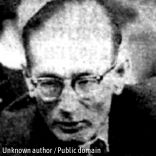
A leading member of the Slovene branch of the LCY, Smole hugely contributed to debates on Yugoslavia’s stance towards Western European economic integration as a member of the Yugoslav government in charge of relations with the EEC between 1974 and 1978. Working closely with Džemal Bijedić and Boris Šnuderl, within the Yugoslav federal government Smole insisted on the political and economic importance of Belgrade’s rapprochement to the EEC. Aware of Yugoslavia’s financial imbalance, within the Yugoslav government he insisted on the need to modernise the country in order to keep the pace of economic integration in Western Europe. His main contribution concerned his personal involvement in Yugoslavia’s application for the European Investment Bank (EIB) financial loans. In his view, EIB loans were to be a political gesture demonstrating Yugoslavia’s involvement in long-term infrastructural projects linking the Western Balkans to the Common Market.
|
As the leading intellectual of the League of Communists of Yugoslavia, Kardelj was a major protagonist in the re-launch of the self-management system in the 1970s. He was very active in communicating the "economic modernity" of Yugoslavia to t... |
|
Federal Secretary for finance between 1974 and 1978, together with Janko Smole he was actively involved in the establishment of direct links between the Yugoslav government and the European Investment Bank for the completion of the “Unit... |
|
He was a senior official at the Western European department of the Federal foreign affairs secretariat between 1973 and 1976. Working closely with Janko Smole, he was one of the main negotiators of the December 1976 EEC-Yugoslavia joint declar... |
|
From the mid-1960s to the late 1970s, Boris Šnuderl was one of the leading actors of Yugoslavia’s policy towards the Western European economic system. A member of the Yugoslav government from 1971 to 1974, he was responsible for Y... |
|
A member of the Montenegrin branch of the LCY and the President of the Federal executive council from 1971 to 1977, when he died in an airplane incident, Džemal Bijedić could be described as the real master of the country’s approach tow... |
|
Stenographic notes on the 102th meeting of the Federal Executive Council, held on 23 October 1975
AJ 130 2321
During this meeting, Janko Smole, a Slovene member of the Federal Executive Council in charge of relations with the EEC, emphasises Yugoslavia's responsibility in the mismanagment of commercial relations with the Community. - Available only in the Archive: http://www.arhivyu.gov.rs/ |
|
Letter by Boriš Šnuderl to Milica Žiberna
Aj 751 894
In this letter, the Slovene member of the Federal Executive Council, Boriš Šnuderl refers to a recent meeting between Petar Milijević, Yugoslavia's ambassador to the EEC, and a representative of the European Investment Bank. It is argued that Yugoslavia should develop financial relations with the EEC. - Available only in the Archive: http://www.arhivyu.gov.rs/ |